With limited budgets and increasing workloads, organizations must become more efficient and effective in the way they organize and manage their projects.
Projects arise from problems or opportunities and are a part of everyday life.
When the decision is made to address a problem or opportunity, a project is created and someone is assigned the responsibility of carrying it out.
What happens once a project is assigned?
How do we organize ourselves?
What are the challenges and potential pitfalls?
How do we resolve conflicts and manage confrontation?
How do we address problems and solutions in a timely manner?
How do we transfer skills, knowledge, and tools to others?
A successful Project Manager—or any manager—must have a high tolerance for ambiguity, a solid understanding of management principles, strong interpersonal skills, close alignment with organizational objectives, and the maturity to work openly in a problem-solving, face-to-face environment.
Project management is something people naturally do every day. Whether planning a home renovation or organizing a surprise party for a friend, you are managing a project. Project management helps individuals and organizations achieve both personal and business goals.
What is Project Management?
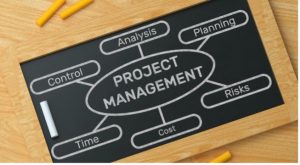
Project Management can be defined as the function of:
- Selecting the objectives of the organization (or project) and the strategy to execute the project.
- Determining the requirements needed to complete the project.
- Allocating available resources wisely to complete each task according to a master plan and schedule.
- Controlling the entire process from the decision or commitment stage through completion.
Project management is therefore a structured way to focus on projects involving multiple tasks, deadlines, people, and budgets.
Project Management does not guarantee successful projects; rather, it seeks to define a viable plan, document reality through execution, and anticipate major problems or crises before they arise.
Essential Elements for Successful Project Completion
Several elements are considered critical for successful project execution:
- A dedicated project team
- A phased approach
- An execution agreement or contract
- Standards and procedures
- Sign-offs and control checkpoints
- Project planning and control systems
A project is an endeavor with a defined beginning and end. It can best be described as the planning, scheduling, directing, and controlling of resources for a relatively short-term objective initiated to achieve specific goals.
In other words, projects require clear direction and a structured plan outlining what will be done, by whom, and within what timeframe.
The Challenges of Managing Projects
Projects are often complex and sometimes controversial. They usually must be completed within limited budgets and strict timelines. To succeed, projects require strong commitment from upper management.
Project management applies a set of principles and methodologies designed for effective goal-oriented planning. This creates a solid foundation for organization, project leadership, scheduling, control, and replanning throughout the lifecycle of programs and projects.
The Project Manager is responsible for planning the project. An unplanned project is often affected by missed deadlines, false starts, failed objectives, costly revisions, and team conflict.
The Project Manager must establish an appropriate level of organization so that the many individual tasks involved can be carried out effectively. Equally important, systems of control and feedback must be implemented to ensure that all project objectives are achieved.
The Role of the Project Manager
Project Managers must bring together multidisciplinary teams and oversee a broad range of activities. They must motivate team members across different departments and organizational levels to perform at their best—often without direct authority to demand it.
Project Managers create a vision for the final outcome and communicate the value of successfully completing the project.
Because project management is challenging, its importance cannot be overstated. Many projects carry significant social and economic impact, and successful project management contributes greatly to public well-being and the overall success of an organization.
Successful projects begin with strong planning and experienced leadership.
Partner with Smart Precise Solutions to ensure your projects are executed with precision, compliance, and operational excellence.
📞 For more information, call 787-403-9799